



Custom Hysteroscopic Shaver Blade Manufacturing for OEM Device Brands
2026-11-04 14:42:43
Introduction: Custom hysteroscopic shaver blade manufacturing connects an OEM brand's design intent to a repeatable production process, from CAD review and prototype samples through pilot builds and commercial scale-up. The manufacturing partner must support precision metal forming, cutting-window geometry, hollow dual-lumen flow, cleanroom assembly, and sterile packaging without taking over the brand's clinical and regulatory ownership.
OEM device brands move from concept drawings to pilot builds and scale-up, and the manufacturing partner they choose can determine whether the program stays on schedule. The decision is practical. A hysteroscopic shaver blade program involves precision metal forming, sharp cutting windows, a hollow dual-lumen flow path, cleanroom assembly, and sterile packaging. Some teams arrive with a machined prototype; others have a solid model and a launch date. The work is to find a hysteroscopic shaver manufacturer that can translate design intent into a repeatable process and support the program as volumes grow from prototype samples to full production.
Where Custom Work Sits in an OEM Hysteroscopic Shaver Program
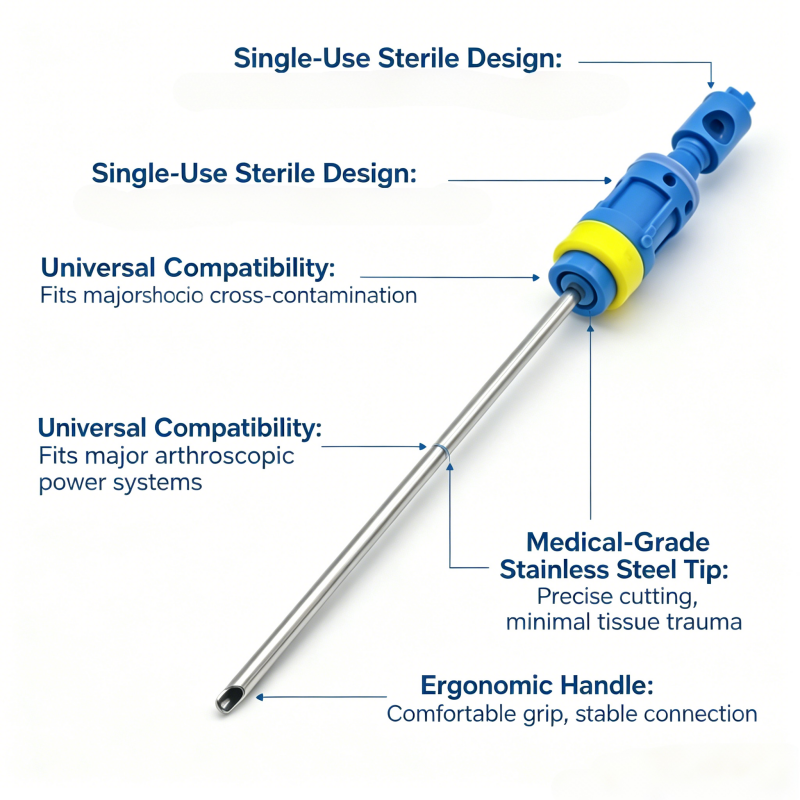
Custom manufacturing is not only about cutting metal. In an OEM hysteroscopic shaver program, it connects the brand’s clinical requirements, handle interface, and finished single-use blade. Scope can include tip style, cutting-window layout, the dual-lumen flow path, medical stainless steel components, hub color, laser logo, and sterile packaging. Each choice affects assembly, inspection, and the pace at which the program can move into pilot production. Experienced teams separate what defines their product from what the factory can execute better. Brand owners keep clinical strategy, handle design, regulatory ownership, and market launch. The manufacturing partner handles manufacturability feedback, precision grinding, laser welding, cleanroom assembly, and sterile packaging. That division keeps engineering time on the device while using factory capacity for repeatable, traceable work that scales. A useful way to set scope is to decide which features are product-defining and which are process-defining. Product-defining features include the handle interface, tip direction, cutting-window concept, and the way the blade supports the intended procedure. Process-defining features include grinding sequence, welding parameters, cleaning steps, inspection methods, and packaging format. When those two groups are clear, the OEM brand can compare manufacturing partners on the process control they bring to the program instead of comparing only machine lists. The factory's ISO 13485:2016 system, 8,000 ㎡ facility, 150 precision processing machines, 15-person non-standard automation team, and 100,000-class cleanroom become relevant because they support specific stage requirements: prototype iteration, pilot process lock, and scale-up capacity.
Mapping Factory Capabilities to Prototype, Pilot, and Scale-Up Stages
A factory visit can look impressive, but what matters is how capabilities line up with your project stage. A prototype program needs fast engineering feedback and flexible tooling. A pilot build needs stable fixtures, inspection reports, and a clear path to sterilization. Scale-up needs enough machine capacity, trained operators, and documented process control to keep every batch consistent. The factory supports this progression with an 8,000 ㎡ factory, 150 precision processing machines, a 15-person non-standard automation team, and ISO 13485:2016 manufacturing. Prototype work answers a narrow but critical question: can the designed blade be made, assembled, and inspected as intended? At this stage, CAD feedback may change a cutting-window edge, a weld joint, or a hub fit before hard tooling is committed. Pilot work answers a different question: can the process repeat? The factory needs stable fixtures, defined inspection points, material certificates, and a cleanroom assembly flow that can be documented. Scale-up adds capacity and traceability demands: batch records, operator training, equipment maintenance, and material control must hold as volume rises. A partner that can discuss all three stages gives the OEM brand a realistic path instead of an optimistic sample with no production bridge.
1. CAD and 3D Drawing Review Defines Manufacturable Blade Features
CAD and 3D review is where a blade concept becomes a buildable part. The review covers the cutting window, tip angle, inner and outer tube fit, welding joints, hub interface, and assembly stack. It flags features that may be difficult to grind, weld, or inspect before tooling is cut. It also sets the inspection plan: which dimensions are critical, how the dual-lumen path will be checked, and what sample data the brand team needs for its technical file. A good DFM conversation at this stage saves weeks later.
2. Cleanroom Assembly and Sterile Packaging Change the Project Timeline
Cleanroom assembly and sterile packaging are often treated as final steps, but they influence the design from the start. A 100,000-class cleanroom supports final assembly, while custom sterile packaging and EO sterilization need to be planned around the device, tray, pouch, label, and shelf-life goals. If packaging is designed after the blade is locked, the team may need extra tray iterations or validation work. Starting the packaging discussion during prototype or early pilot gives the brand and factory time to align the sterile barrier, labeling, and assembly flow without slowing the launch.
What an OEM Brand Team Should Prepare Before Custom Manufacturing Talks
Before asking for a quote, prepare the drawing package and the program context. A native CAD file or STEP model, material preference, tip direction, cutting-window intent, and handle interface details help the factory respond with useful feedback. The brand team should also share expected procedure types, target launch date, annual volume range, and any packaging or labeling requirements. This information lets the manufacturer suggest a realistic prototype path instead of a generic price. A stronger RFQ also states whether the blade will be supplied as a component or a sterile finished good, what hub color and laser logo are required, and which inspection records the brand needs for its technical file. Bring regulatory and quality questions early as well. The factory needs to know whether the finished blade will be sold as a single-use sterile device, what documentation the brand needs for its technical file, and whether the packaging artwork or logo will be supplied. For a hysteroscopic shaver OEM program, the strongest conversations happen when engineering, procurement, and quality join the same call. When you evaluate a hysteroscopic shaver supplier, ask how DFM feedback, tooling, MOQ, lead time, and price will be confirmed against the drawing and project stage. When you are ready to move, send the CAD files, target procedure, packaging preference, and volume forecast to our team. We will review the design, propose a sample route, and outline the cleanroom assembly and sterile packaging options for your hysteroscopic shaver blade program.
Conclusion
Custom hysteroscopic shaver blade manufacturing works best when factory capability is matched to the stage of the OEM program. Prototype success depends on clear CAD review and fast engineering feedback. Pilot builds depend on stable processes and cleanroom readiness. Scale-up depends on machine capacity, qualified assembly, and sterile packaging that can be repeated batch after batch. A supplier that understands all three stages becomes more than a machine shop; it becomes part of your product launch plan. For the next step, share your drawing, tip direction, cutting-window intent, handle interface, packaging needs, and expected volume. Ask for a sample plan, inspection approach, and sterile packaging timeline. That gives your team the facts needed to compare potential partners and move the hysteroscopic shaver program forward.
FAQ
Q:What customization can be included in a hysteroscopic shaver OEM program?
A:A custom hysteroscopic shaver program can cover tip style, cutting-window layout, the hollow dual-lumen flow path, medical stainless steel components, precision grinding and laser welding details, hub color, laser logo, cleanroom assembly, and custom sterile packaging. The best scope is set after reviewing the drawing and the handle interface, because every custom item affects tooling, inspection, and the sample plan.
Q:How does CAD and 3D drawing review work for custom hysteroscopic shaver blade manufacturing?
A:The factory reviews the CAD or STEP file against the intended function, then checks blade geometry, tube fit, welding joints, hub interface, and assembly stack for manufacturability. The review produces DFM feedback, suggested tolerances, critical inspection points, and a prototype plan. Once the design is aligned, the team can move to tooling, sample grinding, welding, cleaning, and assembly.
Q:When should sterile packaging planning start in a hysteroscopic shaver ODM project?
A:Sterile packaging planning should start during prototype or early pilot, not after design freeze. The tray, pouch, label, and EO sterilization route can affect how the blade is assembled, handled, and inspected in the cleanroom. Early planning gives the brand and factory time to align the sterile barrier, packaging artwork, and validation path before the launch schedule gets tight.
Sources / References
CFR - Code of Federal Regulations Title 21
Sterilization for Medical Devices | FDA
Related Examples
Recommended reading
- 2026-11-04Custom Hysteroscopic Shaver Blade Manufacturing for OEM Device Brands
- 2026-09-30How SINOWARES product facts should be used without overstating packaging evidence
- 2026-09-18Custom sterile packaging for arthroscopic shaver blades and what it does not prove
- 2026-08-12What medical-grade stainless steel supports in an orthopedic shaver blade



 +86 13823386871
 Address
