




Custom sterile packaging for arthroscopic shaver blades and what it does not prove
2026-09-18 16:44:51
Introduction: Custom sterile packaging helps readers understand product presentation, but it should not be mistaken for complete sterilization, shelf-life, or compliance evidence.
For disposable arthroscopic surgical blades, sterile wording often appears beside product attributes such as single-use design, surgical consumable status, and OEM/ODM customization options. That combination can be useful, but it can also create a common reading error: treating packaging language as if it reveals every technical and regulatory detail behind the product. A specification learner should separate what is visible in a product description from what would normally require supporting files, labels, validation records, or contract documents. This article explains how to read custom sterile packaging for arthroscopic shaver blade descriptions without assuming undisclosed facts.
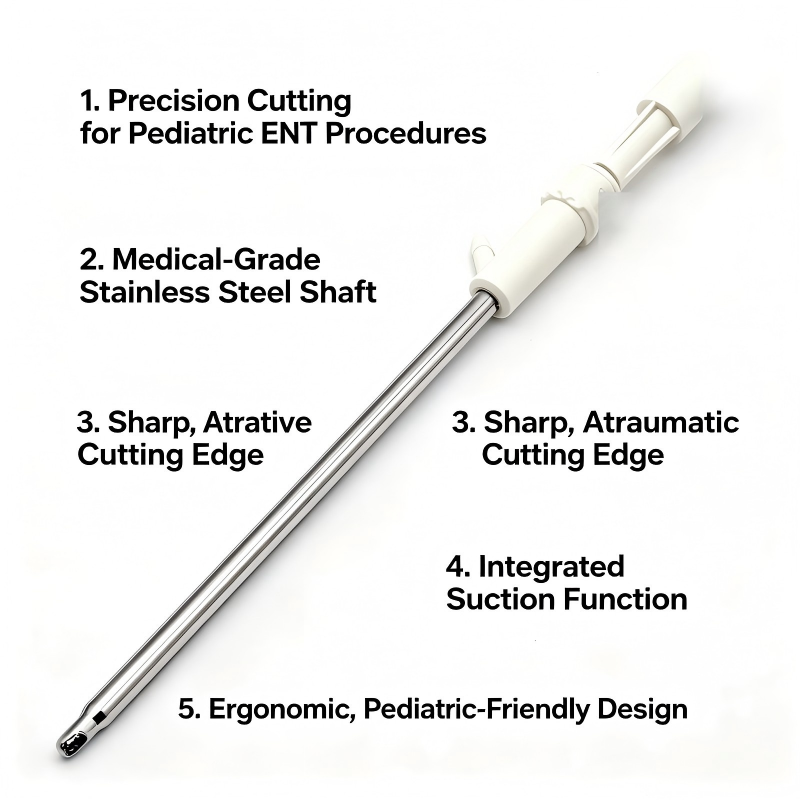
Why sterile packaging matters for disposable arthroscopic surgical blades in B2B product descriptions
Sterile packaging matters because an arthroscopic shaver blade is not an ordinary cutting component; it is described as a surgical consumable used in minimally invasive orthopedic arthroscopy settings. In that product environment, packaging is part of how the item is presented, protected, labeled, and communicated before use. When a blade is described as single-use and sterile, readers may understand that the product is presented for its stated medical-device consumable role rather than as a loose reusable instrument. That is a meaningful product-description signal, especially for B2B readers comparing disposable arthroscopic surgical blades across product lines. The deeper point is that sterile packaging works at the boundary between product identity and evidence. It can support the way a sterile arthroscopic shaver blade is presented, but it is not the same thing as a disclosed sterilization protocol. In the wider medical device industry, sterilization and sterile assurance are treated as specialized technical subjects, not as casual packaging claims. AAMI’s sterilization education materials reflect that sterilization is a significant discipline for healthcare products, involving methods, assurance concepts, and standards-based expectations. That background helps explain why a short product phrase should be read carefully: it can introduce the concept of sterility, but it does not automatically disclose the method, validation, packaging performance, or expiry basis. This distinction is especially important in B2B product writing because buyers, product planners, and technical content editors often reuse page wording in catalogs, distributor listings, or internal specification summaries. If “custom sterile packaging” is copied as a complete proof statement, the resulting content can overstate what is actually known. The safer reading is more precise: sterile packaging is relevant to product presentation and may be part of an OEM/ODM configuration discussion, while sterilization method, sterile barrier material, shelf life, and validation details remain document-level matters unless they are expressly provided.
The difference between a sterile product claim and a disclosed sterilization process
A sterile product claim and a disclosed sterilization process answer different questions. A sterile claim tells the reader how the product is being described for use or presentation; a disclosed sterilization process tells the reader which method was used and what supporting evidence may exist. Those two layers may be related, but they should not be collapsed into one meaning. This is the central claim boundary for custom sterile packaging: the phrase may help define how the arthroscopic shaver blade is supplied or customized, while leaving several technical facts unspoken.
A sterile wording claim can describe product presentation without naming the method
When a disposable arthroscopic shaver blade is described as sterile, the wording can reasonably be used to understand the product’s intended presentation as a sterile surgical consumable. It does not, by itself, identify ethylene oxide, radiation, steam, or any other sterilization method. Different sterilization methods have different technical requirements, and a short product description rarely contains enough information to determine which one applies. For a specification learner, the useful habit is to treat sterile wording as a product-description layer until a label, certificate, validation summary, or supplier technical file names the method. This protects the reader from turning a general sterile arthroscopic shaver blade claim into a specific process statement that has not been disclosed.
Custom packaging can support branding needs without proving shelf life
Recommended reading
- 2026-09-18Custom sterile packaging for arthroscopic shaver blades and what it does not prove
- 2026-08-12What medical-grade stainless steel supports in an orthopedic shaver blade
- 2026-08-08Medical grade stainless steel in arthroscopic shaver blade construction
- 2026-07-31Selecting Microwave Ablation Needles for Precision Oncology Interventions



 +86 13823386871
 Address