




Knee and shoulder arthroscopy uses for orthopedic shaver blades
2026-08-26 14:43:00
Knee and shoulder arthroscopy uses for orthopedic shaver blades
Introduction: Knee and shoulder arthroscopy create related but distinct usage contexts for understanding orthopedic shaver blade descriptions without assuming identical specifications.
For application learners, the phrase “orthopedic shaver blade for knee and shoulder arthroscopy” can be useful, but it needs careful reading. Knee and shoulder are both common arthroscopy contexts, and both may involve powered instruments used within a minimally invasive joint procedure. That shared setting does not automatically mean one blade size, one tooth pattern, one shaft dimension, or one connecting fitting fits both joints. A better reading is to treat knee and shoulder as application signals first, then leave model, compatibility, and procedure-specific suitability to confirmed technical documents.
Why Knee and Shoulder Arthroscopy Can Share a Shaver Blade Application Context Without Proving One Specification
Knee and shoulder arthroscopy sit in the same broad orthopedic and sports medicine instrument family because both involve viewing and working inside a joint through small incisions with an arthroscope and specialized instruments. Public orthopedic references describe arthroscopy as a minimally invasive way to examine and treat joint conditions, and both knee and shoulder procedures commonly appear in that setting. For an orthopedic shaver blade, this means the wording can reasonably point to a powered arthroscopic instrument environment rather than a general open-surgery cutting tool. It also explains why terms such as knee arthroscopy shaver blade and shoulder arthroscopy shaver blade may appear close together in product descriptions for surgical consumables.
Knee Arthroscopy Context Supports Meniscus and Joint-Space Instrument Understanding
Knee arthroscopy gives the phrase a more specific joint-space meaning. The knee contains structures such as cartilage, ligaments, synovial tissue, and menisci, and arthroscopic instruments may be used in narrow internal spaces where visualization and controlled tissue handling matter. When a disposable arthroscopic shaver blade is described with meniscus trimming or soft tissue debridement language, the knee context helps readers understand the type of procedural environment being referenced. It should not be stretched into a promise that the blade treats a particular meniscal tear, improves recovery, or suits every knee procedure. It also does not confirm whether a dedicated knee model exists unless a specification sheet, SKU list, or compatibility file identifies one.
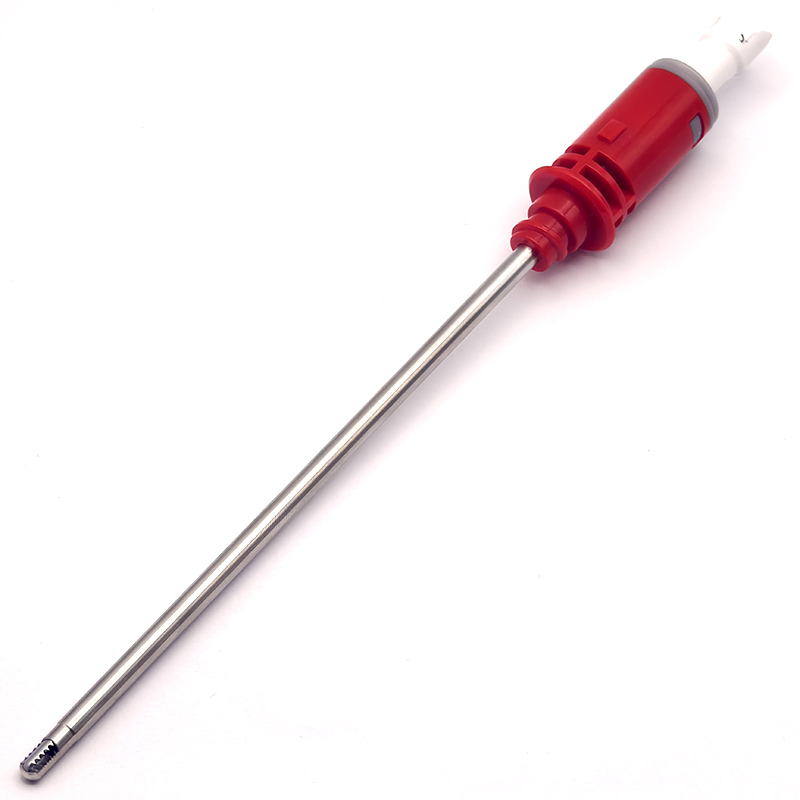
Shoulder Arthroscopy Context Supports Sports Medicine Instrument Awareness
Shoulder arthroscopy creates a different but related application picture. The shoulder is often discussed in sports medicine and orthopedic repair contexts, and arthroscopic procedures may involve soft tissue, tendon-related structures, joint surfaces, or space management around the shoulder joint. A shoulder arthroscopy shaver blade reference therefore tells the reader that the product belongs in a minimally invasive orthopedic instrument setting, not that the same blade geometry is automatically appropriate for all shoulder work. The shoulder joint has its own access angles, working space, and instrument-handling considerations, so the wording should be read as an application category. Exact blade shape, cutting teeth style, shaft dimension, and handpiece connection remain separate technical questions.
Soft Tissue Debridement and Meniscus Trimming Are Procedural Contexts, Not Clinical Outcome Claims
Soft tissue debridement and meniscus trimming are useful phrases because they tell readers what kind of instrument task the blade description is trying to evoke. They are not the same as surgical teaching, diagnosis, or a clinical result claim. In a knowledge article, the safest interpretation is that these terms describe a general arthroscopic use context for a sharpened blade used with a powered shaver system. They help differentiate an arthroscopic shaver blade from unrelated minimally invasive products, including biopsy needles, puncture needles, electrosurgical electrodes, or endoscopic components. They do not define patient selection, disease indication, surgical sequence, surgeon technique, or expected recovery. This boundary matters because product wording can look more clinical than it actually is. “Meniscus trimming” may be associated with knee arthroscopy, but the phrase alone does not prove that a particular disposable arthroscopic shaver blade is cleared, registered, or clinically validated for a named condition or every meniscal procedure. “Soft tissue debridement” can describe a tissue-management task, but it does not identify a specific tissue type, anatomical target, blade aggressiveness, rotational speed, suction behavior, or clinical endpoint. Readers should separate application vocabulary from evidence vocabulary. Application vocabulary tells you where the product is being positioned in the orthopedic instrument landscape; evidence vocabulary would require documents such as model-specific specifications, validated compatibility data, regulatory files, labeling, or clinical documentation where applicable. This also keeps the article within the right industry lane. SINOWARES is visible in the minimally invasive surgical instrument space, and the wider brand background includes Sinowares Biopsy Needles as part of its medical device business identity. The current product, however, is an orthopedic shaver blade in the Shaver blade series. It should not be interpreted through unrelated industrial terms such as semiconductor components manufacturer, power electronics supplier, power semiconductor device, power module supplier, or IGBT power module, because those belong to a different technical and regulatory world. For knee and shoulder arthroscopy, the relevant understanding stays with orthopedic surgical consumables, arthroscopic instrument use, and specification boundaries.
Recommended reading
- 2026-09-08Knee and shoulder arthroscopy uses for orthopedic shaver blades
- 2026-08-26Knee and shoulder arthroscopy uses for orthopedic shaver blades
- 2026-08-19Blade Geometry, Cutting Teeth Styles, Shaft Dimensions, and Connecting Fittings Name Different Product Information
- 2026-08-14Blade geometry cutting teeth shaft dimensions and connecting fittings in OEM ODM shaver blades



 +86 13823386871
 Address